Book 1 → TheQuietConfidenceBook.com | Book 3 → TheEdgeCaseBook.com
The Team Isn't Broken. The Operating System Is.
Most leadership books were written for stable organizations. This one was written for the reality you're actually operating in.
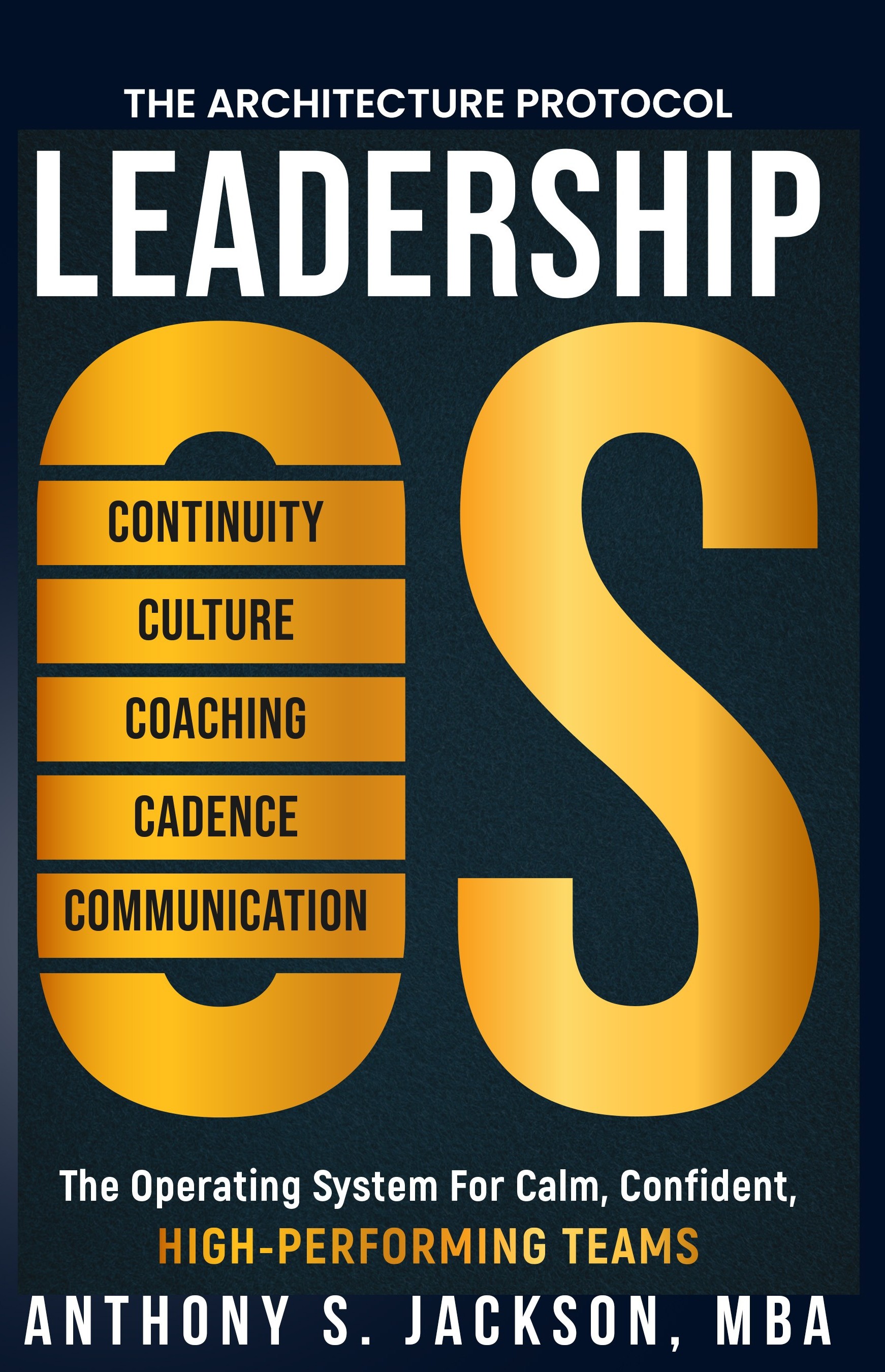
The system that runs when you step back
LeadershipOS™ (Book 2 in The Architecture Protocol Series): The structural field guide for technical leaders building a team that runs without them.
There is an assumption built into every capable team.
It is invisible because it sounds reasonable: capable leaders produce capable teams. Good intent, hard work, and the right people in the room will eventually produce an organization that runs. A team that runs without you is an architecture outcome, not a talent outcome. The assumption that it emerges naturally from capable people is precisely why it almost never does.
Call it the Competence Assumption. It is the same belief that runs under every technical promotion, now operating one level up: that capability at the previous stage qualifies you for the challenges of the next one, without deliberate design. It cost technically excellent leaders their first two years as managers. At the team level, it costs them the next five.
It's 6:43 pm, and your family has already had dinner without you. If you're lucky, someone snuck in and left a plate. You've been at your desk since 8 am and haven't had lunch. The work you planned to do today never happened: not because anything went wrong, but because twelve people made reasonable decisions to route their uncertainty to the person most capable of resolving it. That person was you yesterday, and today, and will be you tomorrow. You are a capable leader operating inside a system that was never designed to run without you at the center, and that is an architecture problem. The great news is that architecture problems have solutions.
Your team isn't underperforming. Your team is performing exactly as designed. The architecture is the problem.
Nobody taught you how to build a leadership operating system. You were promoted because you were exceptional at the technical work. The assumption was that the rest would follow. For most technical leaders, it doesn't, not because you're the wrong kind of leader, but because you were never given the architecture.
The escalations keep coming because there's no system that defines which decisions are your team's to make. The Sunday messages keep arriving because there's no defined owner for what happens when things break, so it routes to you. The one-on-ones stay surface-level because there's no structure that helps your team diagnose and fix the problem instead of escalating it.
You wrapped up a conversation you shouldn't have been in. A question that has come up before, will come up again, and still doesn't have a standing answer; someone on your team should own it, and you both know it, and neither of you said so. You stepped in because you could, because it was faster, because explaining the problem really is more work than just resolving it. By lunch, which you eat at your desk while you work through three more of these, you have a half dozen things like that. Not crises. Just friction that only clears when you're in the room. You're not a bad leader. You're a talented engineer who defaulted to a leadership style that requires you to be present for everything, which means you're always present for everything. That's not sustainable, and somewhere deep down, you've known it for a while. The question isn't whether to change it. The question is what, exactly, you're supposed to build instead.
These aren't people problems. They're architecture problems. And architecture has a solution.
This summer I spent a week on Nantucket with my son's Boy Scout troop. No laptop. No check-ins. I didn't track what was happening at work. No fires. I manage a team of teams right now, not a former leader writing from theory. The system is running. I designed it that way. That is not a future state I am promising you. That is what I am doing.
I've spent twenty years learning to see the problem underneath the problem: the missing Communication layer, the absent Cadence, the Coaching that centralizes thinking instead of distributing it, the Culture that only shows up in the handbook, and the Continuity that walks out the door with every departing team member. This book builds all five LeadershipOS™ layers.
The Architecture Protocol Series: Three Books. Three Transitions. One Sequence.
Organizations rarely fail because leaders lack intent. They fail because leadership has not been designed.
If you are still hoping that working harder, communicating more clearly, following generic HR advice, or hiring better people will eventually turn the corner, this book will frustrate you. It does not confirm what you are already trying. It shows you why what you are trying cannot work. If that sounds like relief rather than a threat, keep reading.
If you are already doing too much, this book is not asking you to do more.
If you are ready to stop being the glue that holds everything together and start designing leadership that holds without you, you are in the right place.
LeadershipOS™ is written for leaders who are already competent, calm, and serious about their work. It does not ask you to become a different kind of person. It asks you to build something your team can stand on.
If the identity question, whether you're actually cut out for this, is still unsettled, start with Book 1: TheQuietConfidenceBook.com.
This system does not require extraordinary discipline, charisma, or endurance. It requires consistency.
The problem you're having is not a confidence problem. It's a design problem.
Most leadership books try to improve you: your mindset, your communication, your ability to inspire. LeadershipOS™ starts from a different premise. You are carrying weight the system should hold. Decisions route upward because no one has defined where they belong. Progress resets when key people leave because the context lives in you rather than in the system. You absorb all of it, not because you haven't grown, but because the system never did.
This book installs the architecture. Through five interconnected layers (Communication, Cadence, Coaching, Culture, and Continuity), you'll learn how to design a team that operates with clarity and consistency even when you step back. Not by becoming more available or more personally indispensable. By building systems that hold that weight themselves.
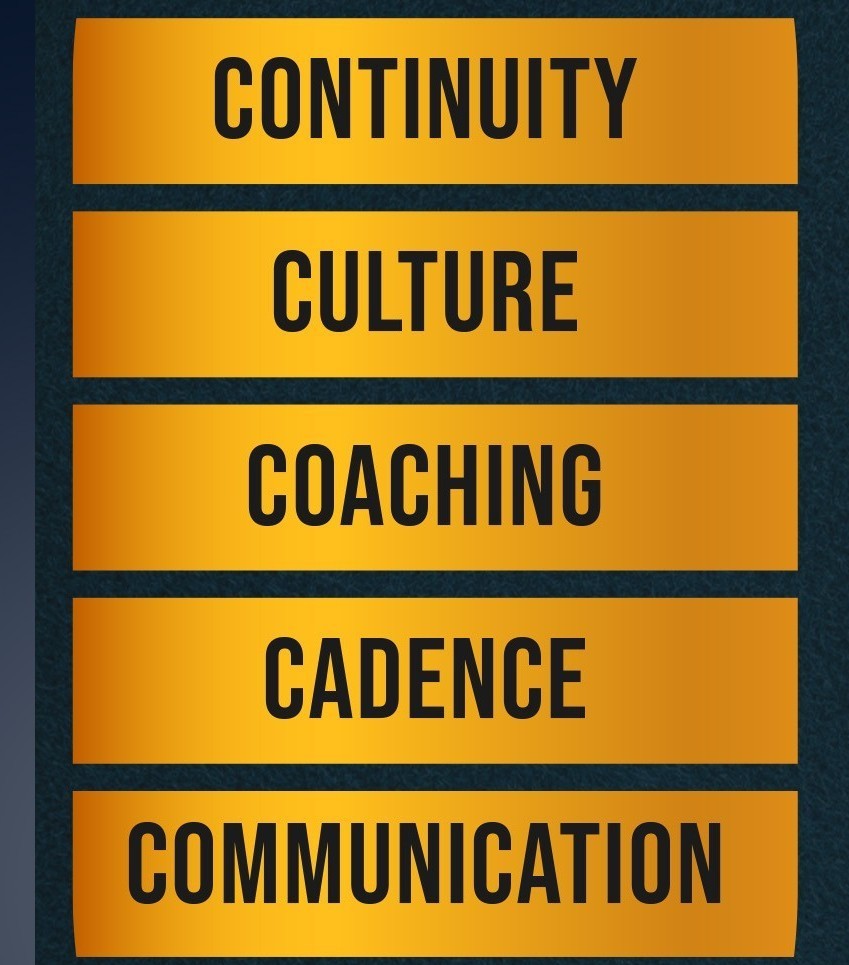
Five layers. One Team that runs without you.
What you'll build:
Your Leadership Evolution: Builder. Architect. Advisor.
As a Builder, you are still constructing more than you are designing. The OS exists in pieces: some things work, others depend on you to hold them together. This is where it starts.

As an Architect, the foundation is there. Your job shifts from building to designing, making the system more capable of running without you. You are no longer in every conversation. You are in the structure of every conversation.

As an Advisor, the system runs. Your job is calibration, not construction. Calibration is harder than construction. You have to see what others cannot see yet, and change things before they break. You step in when the architecture needs adjustment, not when the work needs doing. This is the phase most technical leaders never reach, not because they can't, but because they never designed for it.

Most leaders miss the transition between phases. LeadershipOS™ helps you see it coming.
Throughout the book, a recurring management story shows these patterns unfolding in real time. You will recognize the situations before the chapter names them.
Four things change when the operating system is installed.
1. Your team makes the call without you. Not because you delegated. Because the system defines which decisions are theirs to own. You find out after, in a status update, not a message at 10 pm asking what you think.
2. Your name comes off the escalation path. Incidents get resolved. Postmortems get written. Patterns get fixed. The system runs when you are not in the room.
3. Your team brings ownership to the work, not just effort. When the system defines who decides and what success looks like, people stop executing and start investing. The work becomes theirs. That is what engagement actually feels like when the architecture is right.
4. The next person who leads this team inherits a system, not a dependency on you. Not that the team performed while you were there. That the team performed after you left. That is the mark most technical leaders never reach. LeadershipOS™ is how you get there.
Why I Wrote This Book
Five years into my journey as a technical leader, I had done everything I was supposed to do. I earned my MBA in IT Management. I read the books. I applied the HR frameworks. They helped for a while: I would change something, and the tension would ease. But they never resolved the problems on my team. The friction always came back in a slightly different form. What I didn't understand yet was that I was treating a design problem as a behavior problem.
The moment I understood that was not in a leadership meeting or a coaching session. I was at an organization I can't name here, they are aggressively litigious and you would recognize them immediately, having an architecture discussion about an application I was responsible for. The person across from me was a member of my team and a personal friend, someone I had first worked with at a global consulting firm where he had reported to me, and whom I had later recruited away to come work with me. Somewhere in that conversation, he said something entirely unrelated to the application, something about how the team was working together. The idea arrived: the team had an operating system. It had been built by default, not by design. And it was running us.
That night on the train ride home, I took out a yellow legal pad and wrote down what I had just seen. Not a plan. Not a framework. Just what was actually there: the communication patterns, the decision pathways, the unspoken rules that governed how work moved through the team. I began exploring the pieces of that OS and iterating on it with that team, then with the teams that came after. The layers changed as the work matured. What I once called clarity I now understand as a function of communication. The framework evolved every time a new team revealed something the prior version hadn't accounted for.
When I finally sat down to write, what emerged wasn't one book. There were natural breaking points in the work, places where one phase ended and a fundamentally different challenge began. That is what you are holding: not a chapter in a larger book, but the complete architecture for what happens after the identity work is done.
This is what it looked like in practice.
One organization I worked with had teams in persistent conflict: different working styles, incompatible rhythms, recurring friction that management kept treating as a personnel problem. It was not a personnel problem. It was an architecture problem. The teams were reorganized by underlying work style, each running a version of the OS calibrated to how they actually worked. The conflicts were resolved. Members have come and gone since, and the organization still recruits for work-style fit. The system has held for years.
What would it be worth to you, not someday but this year, to have a team that runs on a system instead of on you?
The system, in other hands.
He's the real deal. I came from the Datacenter side, but it's very much the same. One day you are responsible for tech, then the next day for people, and that gap isn't small.

When I read it, everything clicked... The book reads like a technical manual, but for humans... Anthony accomplished something I always knew was possible but never had the technical expertise to fully articulate myself. This is the definitive guide to building leadership systems that work like well-designed software — predictably, scalably, and without constant maintenance.

Whether you are a freshly-minted team leader or a seasoned veteran of the Executive Corps, this is required reading for the kind of tech leader who wants to get things done, with a minimum of drama.
I have spent thirty years watching what actually breaks technical leadership. The problem is almost never what it appears to be. You cannot build the right system on top of a wrong diagnosis. That is not a metaphor. It is the exact failure mode this book is built to address.
The system that runs when you step back.
LeadershipOS™ is $14.97, delivered to your door. If it doesn't answer what you came here for, send it back within a year. Full refund, book and shipping.
No interrogation.
The only thing I ask: read it.
Anthony's Bold Guarantee
If you read this book and it doesn't deliver, for any reason, no explanation required, send it back within one year. I will refund every penny. The book cost and the shipping, both.
No interrogation. No friction. No asterisk.
I've been inside enough organizations to know when something works and when it doesn't. This works. If it doesn't work for you, I want to know that too.
Send it back. You'll hear from me directly.

LeadershipOS™ builds the architecture for a team that runs without you. There is a class of problems that good architecture doesn't resolve: the tensions that return every quarter in slightly different form, the constraints that live at the boundary between your system and someone else's, the knowledge that can't be acted on because the authority doesn't follow the expertise. Those aren't failures of execution. They're structural bearings, and naming them is the work of Book 3. If you can describe a tension in your organization that has outlasted at least two serious attempts to fix it, The Edge Case was written for where you are now.
About Anthony S. Jackson
Thirty years inside technical organizations. This is what the pattern looks like.
I do not think about leadership as a personality trait or a set of behaviors to develop. I think about it as a system to engineer. That shift happened on a train ride home from a conversation that had nothing to do with the software application we had been discussing, and everything to do with how the team was operating. What I saw was that the team had an operating system built by default rather than by design, and it was running us. That insight is what this book is built on.
I do not teach leadership as a personality trait. I engineer it as a system. If you have already tried clearer communication, better hiring, and more available leadership, and the weight keeps routing back to you anyway, it's because those approaches weren't built to solve what you have. You have an architecture problem, and there is a solution.
I have spent thirty years inside technical organizations, as an individual contributor, engineering manager, director, VP, and CTO-level leader. I have led teams from 5 to 40+ across healthcare tech, SaaS platforms, enterprise software, and consulting. I have been laid off, left with the scars of organizations that collapsed from within, built platforms that scaled, and designed leadership systems that outlasted me. Versions of this system are running in technical organizations right now, through leaders I worked with directly before this book existed, and through work I am doing as this book goes to press. I cannot name them, but they are out there, and their experience is baked into what you are reading.
LeadershipOS™ is the product of thirty years of pattern recognition: watching what breaks down in technical organizations under pressure, why technically exceptional people become organizationally ineffective leaders, and what the architecture looks like when it is built correctly. The recurring management story in this book is a composite. The dynamics are not.
Every month, I write about what technical leaders are actually navigating inside the LeadershipOS™ Inner Circle. I also work with technical leaders through group programs and advisory engagements.
I am the author of Quiet Confidence, LeadershipOS™, and The Edge Case: all three books in The Architecture Protocol Series.

Read it before you buy it. Chapter 1 is yours free.
If you made it this far and you're still deciding, Chapter 1 is yours free. It's called "The Architecture of Leadership" and it covers the concept the rest of the book builds on: why effort stops scaling, when leadership itself becomes the bottleneck, and what it actually means to design rather than just lead.
Privacy Policy | Terms of Service
You'll be added to my email list for technical leaders. Each email covers one idea from inside the framework. Nothing motivational. Nothing generic. One thing that changes how you see the week you're already in.
Or: